


Everything.
Whether your business manages trucks on the road, technicians in the field, or crews moving between jobsites, nearly every operational cost is connected to two questions:
Where was the employee or vehicle, and how long were they there?
When that information is incomplete or inaccurate, businesses make decisions using bad data. Bad data creates real costs.
Every Mile and Every Minute Matter
Vehicles and employees do not have to be productive to cost money.
A driver waiting at a customer’s facility, a technician traveling between appointments, or a crew delayed at a jobsite still generates labor, fuel, equipment, and administrative costs.
Without accurate location data, it can be difficult to determine:
- How long vehicles or employees spend at each location
- Whether time is assigned to the correct customer or project
- Where delays and unproductive time occur
- How much travel time each job requires
- Whether customers should be billed for waiting or additional service time
- Which routes, jobs, and accounts are actually profitable
A few missing minutes may not seem important. Across a fleet or field workforce, those minutes quickly become hours, and those hours become money.
Geofencing Turns Locations Into Business Events
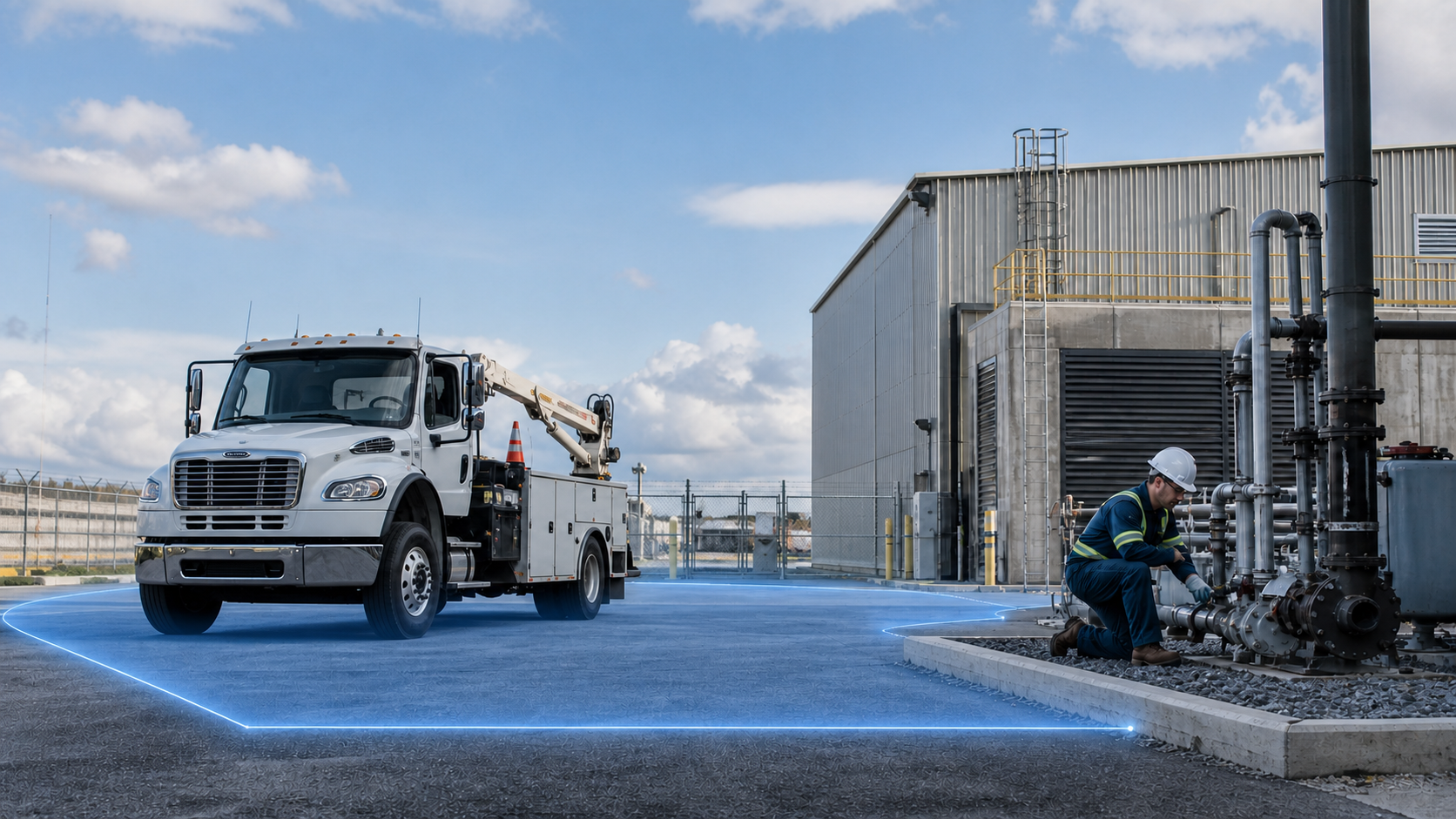
A geofence creates a virtual boundary around a location such as a customer facility, jobsite, terminal, warehouse, maintenance shop, or company yard. When an employee or vehicle enters or leaves that boundary, the system can automatically record the activity. This creates a consistent operational timeline without depending entirely on phone calls, handwritten records, or someone remembering to update their status.
Geofencing can help document:
- Jobsite arrivals and departures
- Customer visit duration
- Pickup and delivery activity
- Loading, unloading, and detention time
- Employee travel and onsite time
- Terminal and company yard visits
- Maintenance and fuel stop activity
- Unexpected stops or route deviations
The goal is not simply to track people or vehicles. It is to understand what is happening throughout the workday.
Better Data Improves Payroll and Billing
Field employees and drivers often work across multiple locations, customers, and projects in a single day. When time is recorded incorrectly, the effects reach far beyond the timecard.
Bad location and time data can cause:
- Payroll corrections
- Missed billable hours
- Uncollected detention or waiting charges
- Incorrect job costing
- Customer billing disputes
- Unnecessary overtime
- Time-consuming administrative work
Geofence records provide objective arrival and departure information. This can help companies verify service time, support customer invoices, reduce payroll discrepancies, find missing assets, and assign labor to the correct job.
Know What the Work Really Costs
A delivery route may appear profitable until waiting time and empty miles are included. A service call may look successful until travel time, overtime, and a return visit are considered. A project may seem on budget because several labor hours were assigned somewhere else.
Geofencing helps reveal the true cost of serving each customer and completing each job.
Better data supports better decisions about:
- Customer and project pricing
- Route and schedule planning
- Dispatching
- Staffing
- Equipment utilization
- Overtime management
- Contract negotiations
- Customer profitability
You cannot price work accurately if you do not know what it actually costs to perform.
Accountability Without Guesswork
Managers should not have to reconstruct an entire day from memory, phone calls, paper records, and incomplete timecards.
Geofencing gives employees, managers, and customers a shared record of when work occurred and how long it took. That creates clearer expectations, more productive conversations, and greater accountability across the operation.
The Real Cost of Doing Business
The cost of doing business is not limited to wages, fuel, insurance, equipment, and materials.
It also includes:
- Time that cannot be billed
- Detention that is never collected
- Labor assigned to the wrong project
- Vehicles and equipment sitting idle
- Routes and schedules built from inaccurate assumptions
- Administrative hours spent correcting preventable errors
- Future work priced using unreliable historical information
Geofencing converts everyday movement into dependable contextual business data. That data helps companies understand where time and money are being spent and where they are being lost.
Whether the work happens behind the wheel or at the jobsite, bad data means bad decisions.
And bad decisions increase the cost of doing business.


.svg)


.svg)


.svg)

